Events
DMS Topology and Geometry Seminar |
| Time: Feb 13, 2026 (01:00 PM) |
| Location: ZOOM |
|
Details:
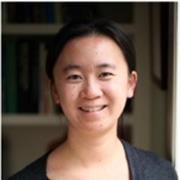
Speaker: Prof. Bei Wang Phillips (University of Utah) Title: Mapping the Topology of Chemical Latent Spaces Abstract: Understanding the structure of latent spaces learned by deep neural networks is increasingly central to interpretability, discovery, and scientific insight. In this talk, I will present recent efforts to characterize the topology of latent representations across modalities, spanning image models, word embeddings, and chemical representation learning. In particular, in molecular science, the design of novel drugs and functional materials can be naturally framed as a search over a learned chemical latent space. However, the combinatorial scale of candidate molecules makes exhaustive exploration computationally infeasible. This motivates tools that expose the global organization of these spaces and guide targeted discovery. To address this challenge, we introduce Chemical Mapper, a framework that integrates topological data analysis with geometric deep learning for interactive exploration of chemical latent spaces. At its core, Chemical Mapper employs the mapper construction to summarize the global shape of latent representations as a graph capturing clusters, overlaps, and branching structure. This topological summary reveals how molecules organize into families and how transitions occur between structural and functional regimes. Our results show that Chemical Mapper reveals intrinsic patterns associated with molecular scaffolds, functional groups, and chemical properties, as well as the structural and functional evolutions of the molecules.
This talk is based on a joint work with Dhruv Meduri, Chuan-Shen Hu, Cong Shen, and Kelin Xia.
Host: Zhe Su
Speaker Bio: Dr. Bei Wang Phillips is an Associate Professor in the School of Computing, an Adjunct Associate Professor in the Department of Mathematics, and a faculty member of the Scientific Computing and Imaging (SCI) Institute at the University of Utah. She received her Ph.D. in Computer Science from Duke University. Her research lies at the intersection of topological data analysis, data visualization, and computational topology, with a focus on integrating topological, geometric, statistical, data mining, and machine learning methods with visualization to enable scientific discovery in large and complex datasets. Her work has been supported by multiple awards from the NSF, NIH, and DOE. Dr. Phillips received a DOE Early Career Research Program award in 2020, an NSF CAREER award in 2022, and the Presidential Early Career Award for Scientists and Engineers (PECASE) from President Biden in 2024, the highest honor bestowed by the U.S. government on early-career scientists and engineers.
|