
DIFFRACTION
6C10.10 SINGLE SLIT6C10.15 ADJUSTABLE SLIT
6C20.10 DIFFRACTION PATTERN AROUND OPAQUE OBJECT
6C20.30 DIFFRACTION PATTERN OF ROUND OPENING
6C20.31 DIFFRACTION PATTERN OF ROUND OPENING OF LASER
|
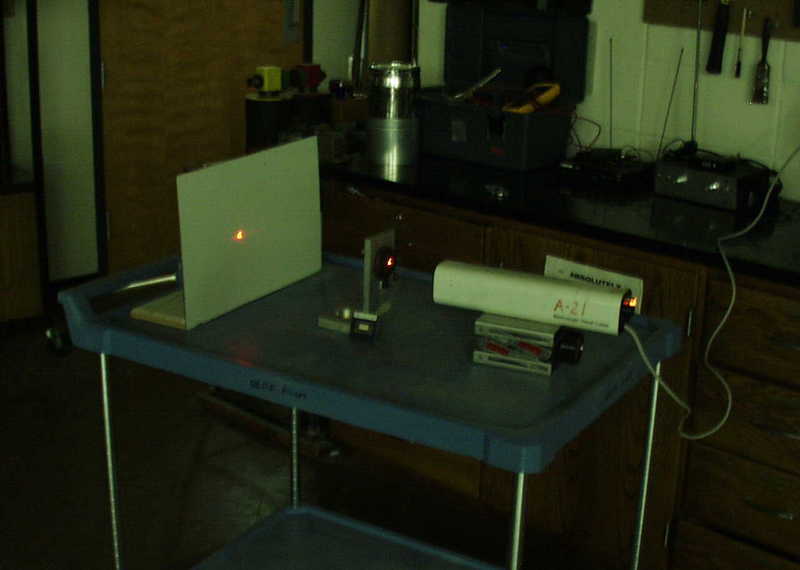
6C10.10 Single Slit Diffraction Shine laser beam through slit to produce diffraction pattern. Slide has several slit widths.
Setup Requirements:Assembled as needed. Dark room needed. Only center and first order visible from back of large room. Use bright laser with separate power supply. Equations: width x sin(A)= n x wavelength Safety Issues: Laser has ten times power of pointer. |
|
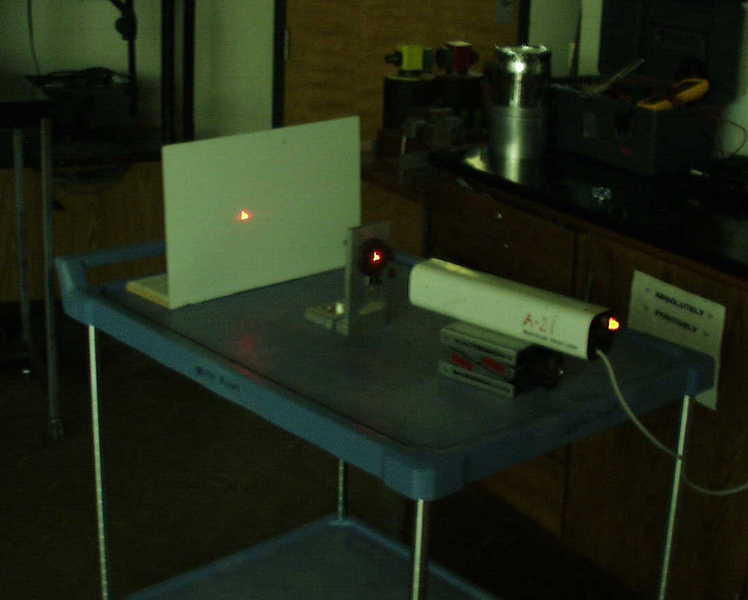
6C10.15 Adjustable Single Slit Diffraction Shine laser beam through narrow slit to produce diffraction pattern. Width of slit is adjustable.
Setup Requirements: Minimal. Use bright laser with separate power supply. Need dark room. Only center and first order visible from back of large room Equations: width x sin(A) = n x wavelength Safety Issues: Laser has 10 times power of pointer. |
|
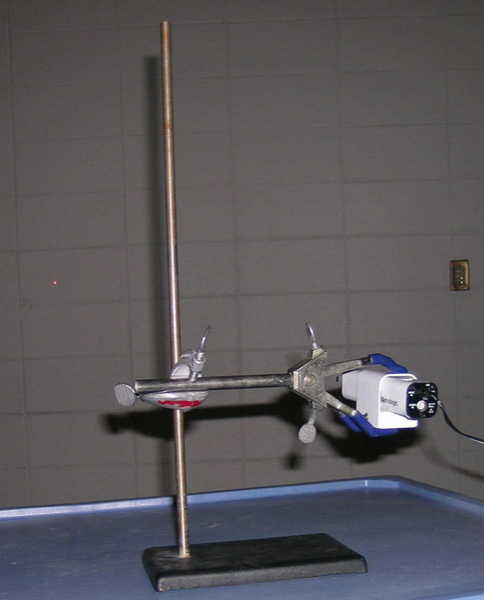
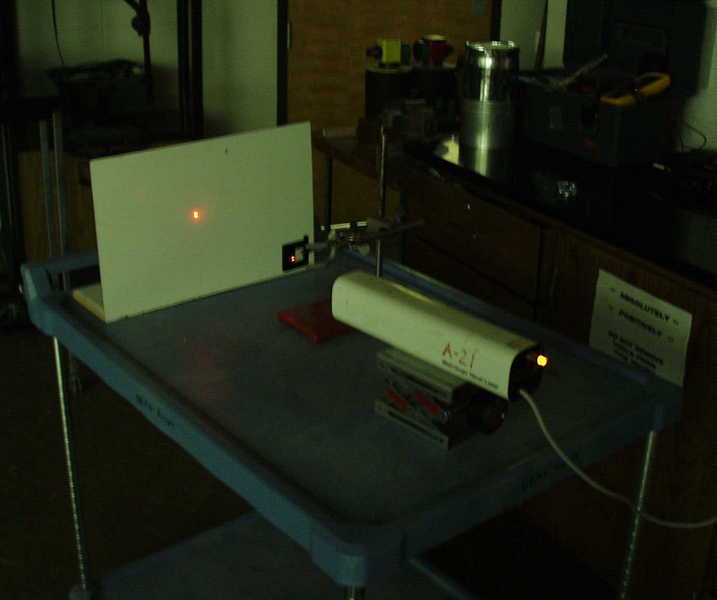
6C20.10 Diffraction Around Objects Shine laser beam on small object to produce diffraction pattern. A pin works well. Concave lens needed to widen laser beam. Center of shadow is bright not dark. Produces a diffraction pattern that is similar to single slit. Pattern is too small to see from seats in large lecture rooms. Use web camera to show to class.
Setup Requirements: Ask ahead of time. Some time needed to assemble and test.Try small sphere (Arago/Poisson spot), or pin. If using web camera, click on Applied Vision 4 icon to put image on monitor. Equations: Babinet's principle. Safety Issues: Laser |

|
6C20.30 Diffraction Pattern Using Round Opening Shine laser beam on hole in slide to produce diffraction pattern. Pattern limits ability to separate binary stars using telescope.
Setup Requirements: Dark room needed. Pattern not visible from back of large lecture rooms. Use extra bright laser. Equations: Position of first minimum given by sin(A) = 1.22 x wavelength / diameter Safety Issues: Bright laser has 10 times power of pointer. |
|
6C20.31 Diffraction Pattern Using Round Opening In Laser The new smaller laser from Metrologic produces a good example of diffraction pattern produced by a round opening just using the hole the laser beam comes through.
Setup Requirements: Dark room needed. Pattern not visible from back of large lecture room. Equations: Position of first minimum given by sin(A) = 1.22 x wavelength / diameter Safety Issues: Laser |