MACROCAT
HISTORY OF ECONOMIC THOUGHT
ECON
3700
FALL SEMESTER
2010
|
Lectures:
Classroom:
Instructor:
Office:
Office hours:
Phone:
E-mail:
Website:
Required Text:
|
8:00 – 8:50 a.m.,
MWF
CoB
(Lowder and Lowder Building), Room 026
Roger W. Garrison
Haley
Center, Room 0305
9:15 –
10:45
p.m., Monday through
Thursday (and by appointment)
---but
no office hours on exam day!
(334)
844-2920
garriro@auburn.edu
http//:www.auburn.edu/~garriro
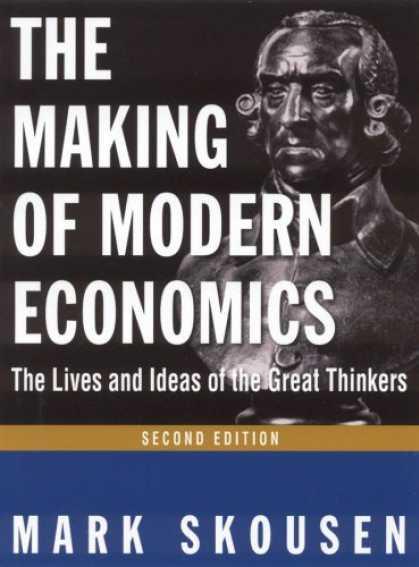
Mark Skousen, The Making of Modern Economics: The Lives and Ideas
of the Great Thinkers, 2nd ed., New York: M. E. Sharpe,
2009.
|
|
Scope and
Purpose of the
Course:
The lectures and texts trace economic ideas from Adam Smith's System of
Nautral Liberty to the theorizing of contemporary economists. Over the
years, economists––some of them, anyway––have learned that the
history of
their discipline can serve as a critical anchor in assessing
contemporary developments. Seemingly new theoretical developments may
turn out to be old but long forgotten. Seemingly innovative policy
prescriptions may turn out to have a long and ignoble history.
|
Leland B. Yeager
identifies the special significance of the History of
Economic Thought: "Cultivation of
the history of thought is more
necessary in economics
than in the natural sciences because earlier discoveries in economics
are in danger of
being forgotten; maintaining a cumulative
growth of knowledge is more
difficult. In the natural sciences, discoveries get embodied not
only into further advances in pure knowledge but also into technology,
many of whose users have a profit-and-loss incentive to get things
straight. The practitioners of economic technology are largely
politicians and political appointees with rather different incentives.
In economics, consequently, we need scholars who specialize in keeping
us aware and able to recognize earlier contributions––and earlier
mistakes––when they surface as supposedly new ideas. By exerting
a
needed discipline, specialists in the history of thought can contribute
to the cumulative character of economics."
---Leland
B. Yeager, 1973
|
Organization,
Readings, and Exam
Schedule:
The lecture topics and reading material is divided into three segments
as shown the
table. The table includes chapter assignments from Mark Skousen's Making
of Modern Economics as
well as some Special Readings,
which are listed (with
links) in a separate table. These
reading assignments
may be augmented or modified as the course progresses.
|
General Topic
|
Reading from
Mark Skousen's
Making of Modern
Economics
|
Special Readings
by R. W. Garrison
(as assigned)
|
Exam Dates
|
I
|
Pre-Classical
and Classical Thought
(through 1871)
|
Chapters 1 through 5
|
Reading 1 |
Friday
October 1
|
II
|
Marxism (1848 and continuing)
Neoclassical
Thought--including the Austrians (1871 and beyond)
|
Chapter 6
Chapters
7 though 12
|
Readings 4 through 8
|
Friday
November 5
|
III
|
Keynesian
Economics and the Moderns
(since 1936 with ups and downs)
|
Chapters 13 through
17 |
Readings 9 and 10 |
Thursday
December 9
8:00 -10:30 a.m.
|
Special
Readings:
|
1.
R. W. Garrison, "The
Intertemporal Adam Smith," Quarterly Journal of Austrian
Economics, vol. 7, no. 1 (Spring), 1998, pp. 51-60.
2.
R. W. Garrison, "Gustav Cassel," in Thomas
Cate, ed., Encyclopedia of Keynesian Economics, Aldershot,
England: Edward Elgar, 1997, pp. 90-93.
3. Vivian Walsh and
Harvey Gram, Classical and Neoclassical Theories of
General Equilibrium: Historical Origins and Mathematical Structure, Market Process, vol. 1, no. 1 (January), 1983, pp.
3-5.
4.
R. W. Garrison, "Austrian Economics," forthcoming in William
A. Darity, ed., The International
Encyclopedia of the Social Sciences," 2nd ed., London:
Macmillan and Company, 2008.
5.
R. W. Garrison, "Eugen von Bohm-Bawerk," in Randall Holcombe,
ed., Fifteen Great Austrian Economists, Auburn, AL: Ludwig von
Mises Institute, 1998, pp. 113-122.
6.
R. W. Garrison, "Ludwig Edler von Mises," in
David Glasner, ed., Business Cycles and Depressions: An Encyclopedia.
New York: Garland Publishing, Inc., 1997, pp. 440-42.
7.
R. W. Garrison, "Murray Rothbard," in Murray
N. Rothbard: In Memorium. Auburn, AL: Ludwig von Mises Institute,
1995, pp. 13-18.
8.
R. W. Garrison and I. M. Kirzner, "Friedrich August von Hayek" in John Eatwell,
Murray Milgate, and Peter Newman, eds., The New Palgrave: A
Dictionary of Economics, London: Macmillan Press Ltd., 1987, pp.
609-614.
9.
R. W. Garrison, Review of Allan
H. Meltzer, Keynes's Monetary Theory: A Different
Interpretation. Critical Review, vol. 6, no. 4, 1993, pp. 471-492.
10. R. W. Garrison,
Review of Fred R. Glahe, ed., Keynes's The General Theory of
Employment, Interest, and Money: A Concordance, The Austrian Economics Newsletter, vol. 12, no. 1 (Spring), 1992, pp.
10-12. |
Class
Attendance:
Students are required to attend all class meetings and to arrive before
the lecture begins. (Late-arriving
students can be counted as absent at
the discretion of the professor.) Students
will sign an attendance roster each day. Documentation of excused
absences must be presented within one week of the absences. A harsh
penalty will be
imposed on any student who signs the attendance roster for another
student:
The signer and possibly the signee will forfeit all attendance
points.)
Excused
Absences: University excuses must be presented within one week
after the student returns to class.
Class
Participation: Student
participation is
encouraged
and welcomed. Questions for the purpose of clarification will benefit
most
all the students; critical questions and comments tend to make the
course
more interesting.
Examinations:
There will
be two fifty-minute exams and a comprehensive final exam. The specific
format of exams will
be largely if not wholly in a multiple-choice format. The
wearing of caps,
hats, bonnets, sombreros, bandanas, helmets, ski masks, sun visors, or
other
headgear is not
allowed during the exam.
Make-up
Exams: Students will
not be permitted
to take the exams early or late. Should it become necessary for a
student
to miss an exam, he or she should notify the instructor in advance
of the exam date. Students with excused absences will be required to
take
a make-up exam as arranged by the professor.
Grading System: Each student begins
the course with 100 attendance points.
Then, beginning on Monday, August 24, he or she loses three points for
each
unexcused absence. The three exams will
count 100 points each, which means that the totla possible points for
the course (exams plus attendance) is 400. Hence, if a student has
three unexcused absences (for an attendance score of 94) and has exam
scores of 85, 82, and 79, his or her course average is (94 + 85 +
82 + 79)/4 = 85. There are no
extra-credit assignments. Letter
grades for the course will be determined by applying a 10-point scale
to
the average of the four scores. That is, 90 and above is an A; 80 to 90
is a
B; etc..
Biographical sketches of
Significant
Economists (gleaned mostly from the History of Economic
Thought (HET) website):
|